

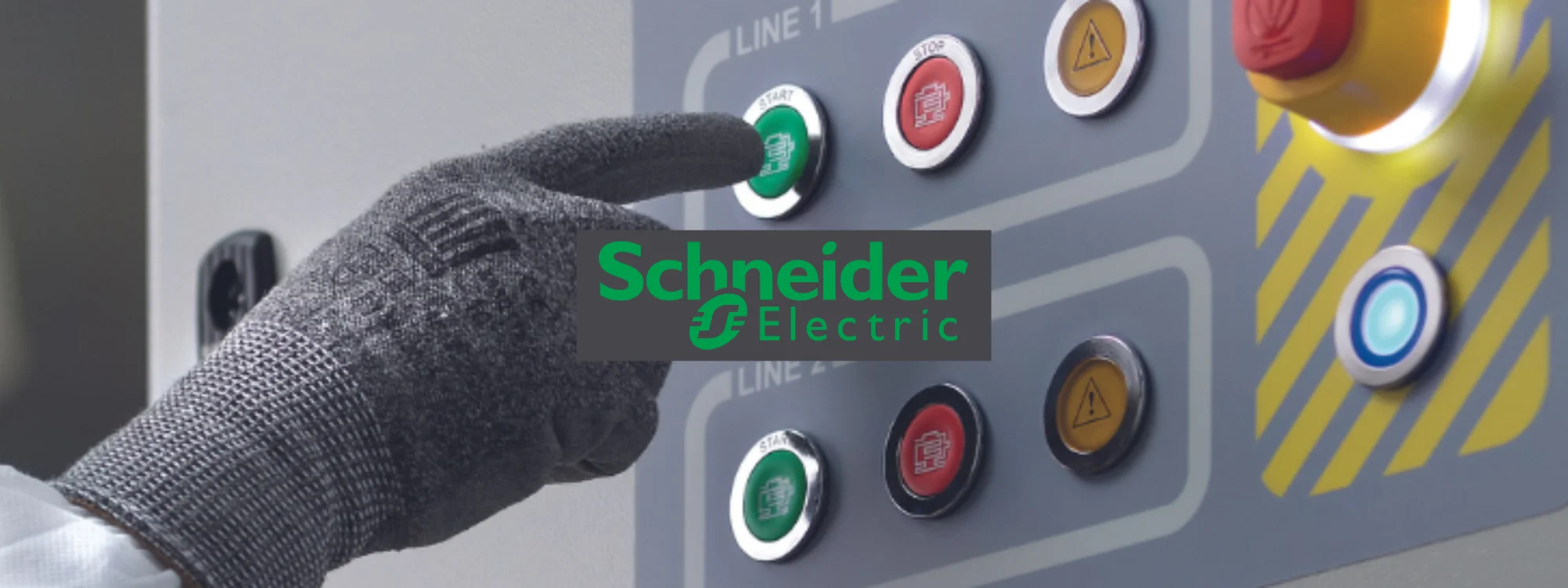
At Province Electric Supply, we believe sustainability isn’t just about the big projects — it’s about making smarter choices at every level of design. Push buttons might be a small part of your control system, but they can have a big impact on energy use, material waste, and overall efficiency.
Here are five ways modern push-button technology helps you meet your sustainability goals — without compromising performance.
1. Responsible Material Choices
Modern push buttons are built with recycled metals and responsibly sourced plastics, reducing the need for virgin raw materials.
Schneider Electric’s Harmony XB4 push buttons use over 20% recycled alloy content while maintaining the same ruggedness and reliability customers expect. This supports circular economy initiatives and helps your facility lower its environmental footprint.
2. Cleaner, More Efficient Manufacturing
Sustainable design starts with production. Schneider Electric has implemented closed-loop water treatment systems that process over 3,000 m³ of water per year, preventing waste and reducing emissions by 17% — equivalent to 6,700 tonnes of CO₂ annually.
When you buy through Province, you’re choosing suppliers who actively invest in reducing energy consumption, waste, and water usage across their factories.
3. Energy Efficiency in Daily Operation
A well-designed push button does more than close a circuit. Low-resistance contacts and optimized component design minimize energy loss and heat generation, improving long-term efficiency.
Schneider’s Harmony XB4 and XB5 push buttons are built for millions of mechanical and electrical cycles, giving you reliable performance and reducing the need for frequent replacements.
4. Better Packaging, Smarter Shipping
Sustainable packaging replaces single-use plastics with unbleached cartons and plant-based inks, reducing harmful chemical runoff.
Province helps extend that impact by consolidating deliveries and offering free local delivery, helping to reduce the carbon footprint of every order you place.
5. Built to Last — and Be Repaired
Durability is one of the most effective ways to cut waste. Harmony push buttons feature modular construction, allowing you to replace individual components — like contacts, actuators, or light blocks — instead of discarding the entire unit.
This not only reduces landfill waste but also helps minimize downtime and lower your total cost of ownership.
Why It Matters
Sustainability doesn’t mean compromise — it means smarter engineering. By selecting push buttons designed for durability, efficiency, and repairability, you help reduce waste and energy use across your operation.
Province Electric Supply is proud to partner with Schneider Electric to make these solutions available across Ontario. Together, we can make small choices that lead to a measurable impact for your business and the environment.
FAQ: Sustainable Push Buttons
Q: How do push buttons contribute to sustainability?
A: According to Schneider Electric, modern push buttons are designed with recycled metals and plastics, manufactured with reduced energy and water use, and packaged with recyclable materials — helping lower the overall environmental impact.
Q: What kind of materials are used?
A: Schneider’s Harmony XB4 push buttons include recycled metal content and responsibly sourced plastics, supporting a circular economy approach.
Q: How does manufacturing impact sustainability?
A: Schneider has implemented closed-loop water systems and improved production processes to lower emissions and reduce resource consumption during manufacturing.
Q: What about packaging?
A: Sustainable packaging often replaces single-use plastics with unbleached cartons and plant-based inks, reducing harmful chemical runoff.
Q: Why is durability important?
A: Long product life and repairability reduce waste by keeping push buttons in service longer, cutting down on replacements and landfill contributions.
Get Started Today - Contact Us to Learn More!
- Find a Province Branch Near You
- 1-888-795-1795
- info@province-electric.com
- Shop Harmony Push Buttons Online