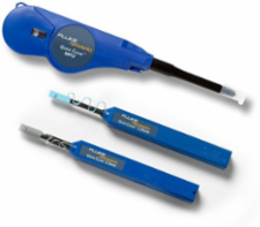
Fluke NFC-KIT-BOX FI-500 FiberInspector™ Micro Fiber Optic Scope Camera
- MPN: NFC-KIT-BOX
- UPC: 754082055372
- PPN: FLU-NFC-KIT-BOX
CAD
$184.77
/ EA
Available to Order from Manufacturer
Lead times may vary. For an accurate estimate please contact us.
Looking to buy a large quantity?
To View Branch Inventory And Your Custom Pricing
Spec sheet
Description
Dirty fiber optic end faces are the major cause of problems in single-mode and multimode fiber optic systems. The FI-500 FiberInspector™ Micro fiber optic scope camera removes the hassle associated with inspecting fiber end faces, especially in low light and high cable density situations. Simply plug the cable into the FI-500 and touch the AF button. Within seconds, the fiber end face comes into sharp, clear view. And if you're working in a difficult-to-reach place or you can't get the image to stand still, just touch the pause button to freeze the image. PortBright™ illumination helps you see ports in dark and dense panels. Autofocus provides a stable image in a few seconds. Large display shows single-mode and multimode fiber end faces. Includes 4 UPC tips (LC, SC, 1.25 mm, and 2.50 mm), with APC and bulkhead tips available. What is a fiber optic camera? A fiber optic camera (also called a fiber optic scope or fiber optic inspection scope) is a specialized device designed to inspect fiber optic end faces. It magnifies and captures clear images of the fiber ends, allowing technicians to scrutinize them for cleanliness and integrity. This tool is crucial for identifying contaminants and physical damage that can severely impact network performance. Advanced models, such as the FI-500 FiberInspector™ Micro, have features like autofocus and built-in illumination, making fiber inspection easier, even in challenging environments. By ensuring the fiber ends are clean and undamaged, these cameras play a vital role in maintaining the high performance of fiber optic networks. How do fiber optic cameras work? Fiber optic cameras operate by magnifying the image of a fiber optic connector’s end face, allowing a technician to inspect it for cleanliness and integrity. These scopes typically include a camera or a microscope-style eyepiece for viewing. Advanced models often feature autofocus and illumination capabilities to make viewing easier in a variety of environments. The image captured by the scope can be displayed on a screen for detailed examination — which avoids potential eye damage from looking into a live fiber with an optical scope. The key function of a fiber optic camera is to identify and highlight any contamination, such as dust or oils, and physical damage, like scratches or chips on the end face. These defects can impede the performance of the fiber optic network by causing loss and reflectance. inspection with a fiber optic scope is crucial any time a connection is made to maintain the high performance of fiber networks, since even minor defects can have significant impacts on signal transmission. What is the biggest advantage of fiber optics? The single biggest advantage of fiber optics for networks is its high bandwidth capacity, which is crucial in modern network environments, where demand for faster transmission speeds is continually increasing. Fiber optics allow for significantly faster data transmission speeds compared to traditional copper cabling and are immune to the electromagnetic interference that can affect their copper counterparts. Fiber optic cables are also smaller and lighter than their copper counterparts; they boast an extended reach of up to over 100 kilometers (compared to copper’s 100 meters), making them ideal for extensive installations like large commercial buildings and data centers. Why is inspecting fiber optic cabling difficult? For all fiber’s advantages, today's high density fiber patch panels make inspection a challenge. Finding the cable or port to test can be tough, especially in the low light conditions found in most data centers and wiring closets. Manual inspection scope cameras are simple to use, but they don’t work well on patch panels or where there’s a high density of fiber. Fully automatic fiber optic inspection scopes can analyze and grade the cleanliness of fiber connections, but their advanced analytic capabilities aren’t usually needed for quick, basic troubleshooting. The FI-500 simplifies the inspection process. Its built-in PortBright flashlight helps you find the right port or cable. The small-profile probe fits into tight spots and features push-button controls for simple operation. Its autofocus camera provides a sharp view of the end face in a few seconds, while its pause button freezes the image on the crisp 320 x 240 display for more detailed inspection. The FI-500 FiberInspector Micro fills the gap between a manual scope and a fully automated fiber optic inspection scope: it has the simplicity and practicality of a manual tool, plus advanced features that reduce troubleshooting and inspection time.
Documentation & Downloads
Specifications
Display
| Magnification | 1x, 2x, 4x |
|---|---|
| Battery type* | Rechargeable NiMH, 2 x 1.2V, 2700 mAh |
| Charge time | 4 hours minimum |
| Display | 3.2 inch TFT LCD, 320 x 240 |
| Input | USB 2.0, Type A |
| Weight | 9.7 oz (275 g) |
| Frames per second | ≥12 |
|---|---|
| Battery life* | 6 hours of typical probe use || 3 hours of continuous probe use |
| Power adapter | Input: 100 to 240 VAC±10%, 50/60Hz || Output: 6 VDC, 3 A maximum Class |
| Software upgrades | Upgrades can be installed from a USB drive |
| Dimensions | 5.5 in x 3.2 in x 1.5 in (140 mm x 80 mm x 39 mm) |
Probe
| Magnification | 200x. Zoom function has 1x, 2x and 4x settings |
|---|---|
| Field of view | 610 μm x 460 μm |
| Light source | LED, >100,000 hr life |
| Port illumination | 2 white LEDs |
| Output | Video output through USB 2.0 interface |
| Weight | 4.4 oz (125 g)(with no adapter tip) |
| Camera type | 5 Megapixel 1/4-inch CMOS sensor |
|---|---|
| Resolution | 1 μm |
| Endface illumination | Coaxial blue LED |
| Power | Supplied through the USB interface |
| Dimensions | 4.6 in x 2 in x 0.95 in (117 mm x 51 mm x 23 mm) (length depends on adapter tip) |
General Specifications
| Temperature range without the power adapter | Operating: 0 °C to +50 °C || Storage: -30 °C to +60 °C |
|---|---|
| Humidity range | Storage: 0% to 95% (35 °C to 45 °C) RH non-condensing || Operating: 0% to 95% °C (0 °C to +50 °C) RH non-condensing |
| Vibration | 2 g, 5 Hz to 500 Hz |
| Safety | IEC 61010-1 3rd Edition IEC 62133 |
| Temperature range with the power adapter | Storage: -20 °C to + 60 °C || Operating: 0 °C to +40 °C |
|---|---|
| Altitude | Operating: 4,000 meters || Storage: 12,000 meters |
| Shock | 1 meter drop test |

Similar Products
Loading carousel layout...
Loading carousel layout...
CAD
$184.77
/ EA
Available to Order from Manufacturer
Lead times may vary. For an accurate estimate please contact us.
Looking to buy a large quantity?
To View Branch Inventory And Your Custom Pricing
Spec sheet
CAD$184.77/EA
Loading add to cart quantity...